
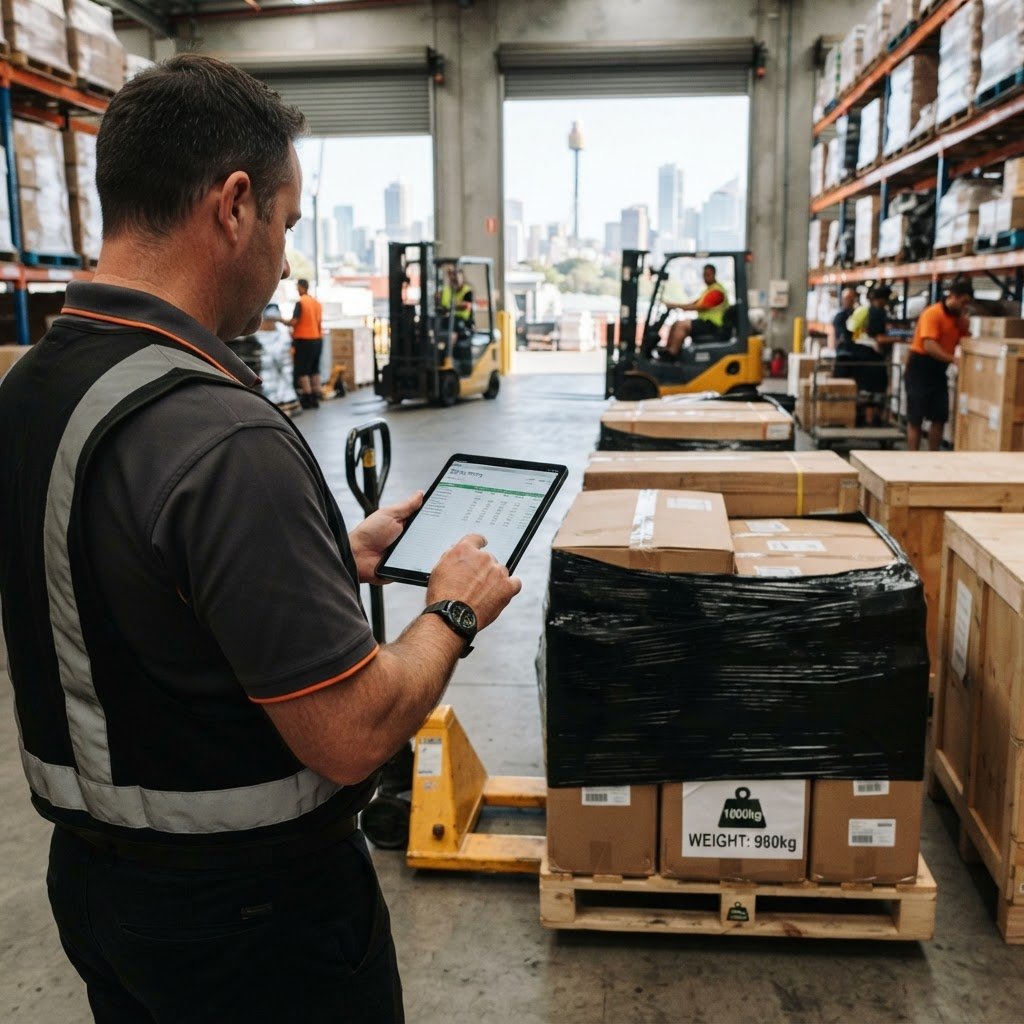
In the bustling industrial heart of Sydney, efficiency and safety are the twin pillars of a successful supply chain. Whether you are moving goods from Port Botany to Western Sydney or dispatching regional freight across New South Wales, the integrity of your load begins at the base. Many businesses focus heavily on the dimensions of their freight, but understanding pallet weight limits is arguably more critical for preventing transit damage and ensuring workplace safety.
1. Why Load Capacity Matters for Your Supply Chain
Ignoring the maximum pallet load capacity is a recipe for operational disruption. When a pallet is overloaded, it does not just risk collapsing during transit; it compromises the structural integrity of your entire racking system and endangers forklift operators. In the NSW logistics environment, where heavy pallet transport is an everyday occurrence, adhering to safe working load pallets guidelines is essential for compliance and cost management.
2. Standard Pallet Weight Capacities in Australia
In Australia, the standard timber pallet—often referred to as the ‘Australian Standard Pallet’ (1165mm x 1165mm)—is engineered to handle significant weight, but this capacity varies based on whether the load is static or dynamic. To help you plan your next shipment, we have outlined the general capacity tiers below:
| Pallet Type | Static Capacity (kg) | Dynamic Capacity (kg) |
|---|---|---|
| Standard Timber (Hardwood) | 2000kg+ | 1000kg – 1200kg |
| Standard Plastic (Heavy Duty) | 1500kg | 800kg – 1000kg |
| Lightweight/Export Pallet | 800kg | 400kg – 600kg |
Note: These figures are guidelines. Always verify the specific rating provided by your pallet supplier, as moisture content and age can significantly reduce these thresholds.
3. Static vs. Dynamic Loads: What’s the Difference?
Understanding these two terms is vital for anyone involved in warehouse operations. A static load refers to the weight a pallet can bear when it is sitting stationary on the floor. A dynamic load refers to the weight a pallet can safely handle while it is being lifted by a forklift or moving on a truck. Many businesses assume their pallet can hold 2 tonnes because it handles that weight on the warehouse floor; however, if you try to lift that same weight with a forklift, you may exceed the dynamic rating and cause a catastrophic failure.
4. How to Assess Your Load Requirements
Before dispatching your next shipment, follow these steps to ensure you remain within safe limits:
- Calculate the Total Weight: Include the weight of the goods, the packaging materials, and the pallet itself.
- Identify the Center of Gravity: Ensure the weight is evenly distributed across the surface of the pallet to avoid stress points.
- Check the Pallet Grade: Ensure the pallet is not damaged, warped, or showing signs of rot.
- Consult Your Freight Provider: If you are unsure about the heavy pallet transport requirements for your specific goods in NSW, speak with the team at Go Pallet for advice on suitable equipment.
5. Navigating Pallet Weight Restrictions in Sydney
Sydney’s transit corridors are subject to strict road regulations enforced by the National Heavy Vehicle Regulator (NHVR). Overloading pallets contributes to axle weight issues on trucks, which can lead to significant fines and dangerous road incidents. By accurately declaring your pallet weights, you ensure that your logistics partners can plan the weight distribution of their vehicles correctly, keeping your freight moving through Sydney’s metro network without legal or safety bottlenecks.
6. Best Practices for Maintaining Load Integrity
To avoid the risks associated with exceeding weight limits, always wrap your pallet correctly. A well-stabilised load reduces the likelihood of shifting, which effectively lowers the dynamic stress placed on the pallet structure. For further insights on how to prepare your goods for transit, refer to our guide on preparing goods for palletised freight to ensure your items arrive safely every time.
Frequently asked questions
What is the difference between static and dynamic pallet capacity?
Static capacity is the weight a pallet can support while sitting still on a flat surface. Dynamic capacity is the weight a pallet can safely support while being moved by a forklift or during transport.
Are all wooden pallets rated for the same weight?
No. Pallet capacity depends on the timber grade, construction, and the age of the pallet. Always check the manufacturer’s specifications for your specific pallet type.
Why does weight distribution matter on a pallet?
Uneven weight distribution puts excessive stress on specific pallet boards, which can lead to failure even if the total weight is under the pallet’s maximum rating. Always aim for a balanced, centered load.
Ready to move your freight?
Fast, reliable pallet transport across Australia — get pricing in minutes.