
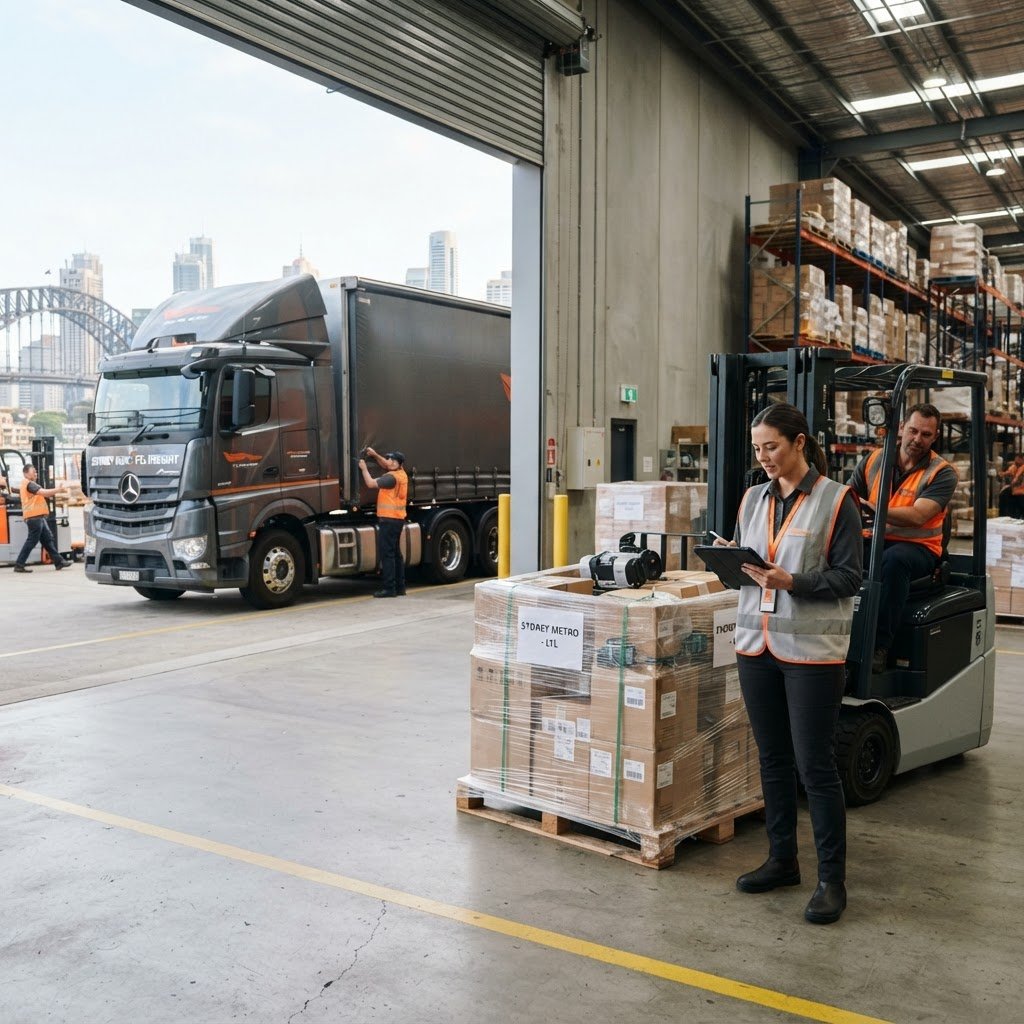
For many businesses operating across Sydney and regional NSW, the logistics budget is often dominated by one major variable: freight. Whether you are shipping high-value machinery from Port Botany or moving bulk inventory across the Sydney metro area, the age-old debate of LTL vs FTL freight in Sydney is one that directly impacts your bottom line. Choosing the wrong method doesn’t just waste space—it wastes money.
Understanding the nuances of transport modes is essential for freight cost optimisation in Sydney. By balancing transit time, volume, and risk, you can transform your logistics strategy from a necessary expense into a competitive advantage.
Understanding the Basics: What Defines LTL and FTL?
At its simplest level, the decision comes down to space and exclusivity.
- LTL (Less than Truckload) Shipping: This is ideal for smaller shipments that do not require an entire trailer. Your goods share space with freight from other companies. You only pay for the portion of the truck your pallets occupy, making it a highly cost-effective method for smaller loads.
- FTL (Full Truckload) Freight: As the name suggests, you book the entire truck for your shipment alone. Whether you fill it to the brim or leave it half-empty, the truck is yours. This provides exclusivity, faster transit times, and reduced handling risks.
When LTL Shipping is the Smarter Financial Move
Less than truckload shipping in Sydney is the backbone of small to medium enterprises. If you aren’t moving enough stock to fill a standard 12-tonne or 24-tonne trailer, LTL is almost always the more economical path. By leveraging pallet shipping options in Sydney that consolidate multiple loads into one vehicle, transport providers can offer significantly lower rates.
However, keep in mind that LTL freight involves multiple stops at distribution hubs. This means your goods are handled more frequently, which increases the necessity for robust packaging and preparation to avoid transit damage. If your goods are durable and your schedule is flexible, LTL is your best bet for keeping overheads low.
The Value Proposition of Full Truckload Freight in NSW
Full truckload freight in NSW becomes the superior choice when you are moving high-volume, time-sensitive, or fragile cargo. When you book a dedicated vehicle, the truck travels directly from your dispatch point to the destination without the “hub-and-spoke” detours associated with LTL. This means less handling and, consequently, a lower risk of damage.
Consider FTL when:
- You have a shipment large enough to fill at least 10-12 pallets.
- The delivery deadline is strict and you cannot afford delays caused by other companies’ freight.
- You are shipping high-value goods that require minimal physical handling.
- Your destination is in a remote regional NSW area where LTL transit schedules are infrequent.
Comparative Analysis: At a Glance
| Feature | LTL (Less than Truckload) | FTL (Full Truckload) |
|---|---|---|
| Cost | Lower (Pay for space used) | Higher (Fixed rate per truck) |
| Handling | High (Multiple touchpoints) | Low (Direct transport) |
| Transit Speed | Slower (Consolidation required) | Fast (Direct route) |
| Best For | Small to mid-sized pallet loads | Bulk, high-value, or urgent freight |
Key Factors Influencing Your Sydney Freight Costs
Freight cost optimisation in Sydney requires looking beyond the base rate. Several factors can sway the cost-benefit analysis between these two modes:
- Density and Weight: High-density freight (heavy items that occupy little floor space) may actually be cheaper to ship via LTL because it doesn’t max out the truck’s weight capacity as quickly as bulky, light items.
- Access Constraints: If your delivery site in Sydney requires a tail-lift pallet delivery because you lack a loading dock or forklift, LTL providers may charge additional service fees. FTL services often have more flexibility regarding equipment and site access.
- Peak Season Demand: During busy periods, full truckload capacity can become scarce. Planning your logistics calendar and communicating volume projections to your carrier early is essential to securing stable rates.
Choosing the Right Partner for Your Sydney Business
Whether you choose LTL or FTL depends on the unique demands of your supply chain. For many growing Sydney businesses, the ideal solution is a hybrid approach—using LTL for standard inventory replenishment and reserving FTL for urgent project rollouts or seasonal peak demand. Ensuring you are compliant with the latest National Heavy Vehicle Regulator (NHVR) standards remains a non-negotiable part of these transport decisions, ensuring safety and efficiency on the road.
If you are unsure which mode suits your current inventory, assessing your pallet dimensions and current throughput is the first step. By working with a logistics partner that understands the specific geography and traffic challenges of the Sydney metro area, you ensure that your freight moves as smoothly as possible, regardless of the truck size chosen.
Frequently asked questions
What is the main difference between LTL and FTL?
LTL (Less than Truckload) involves sharing truck space with other shippers, making it more cost-effective for smaller loads. FTL (Full Truckload) gives you exclusive use of the entire vehicle, which is faster and reduces handling, but at a higher cost.
When should my Sydney business switch to FTL?
You should consider switching to FTL when your shipment size reaches approximately 10-12 pallets, when you are shipping high-value or fragile goods that shouldn’t be handled multiple times, or when you have a strict, non-negotiable delivery deadline.
Does LTL freight in Sydney take longer than FTL?
Yes, generally. LTL freight requires consolidation at various depots and multiple stops to pick up or drop off other companies’ freight, which adds to the total transit time compared to the direct route taken by an FTL truck.
Ready to move your freight?
Fast, reliable pallet transport across Australia — get pricing in minutes.