
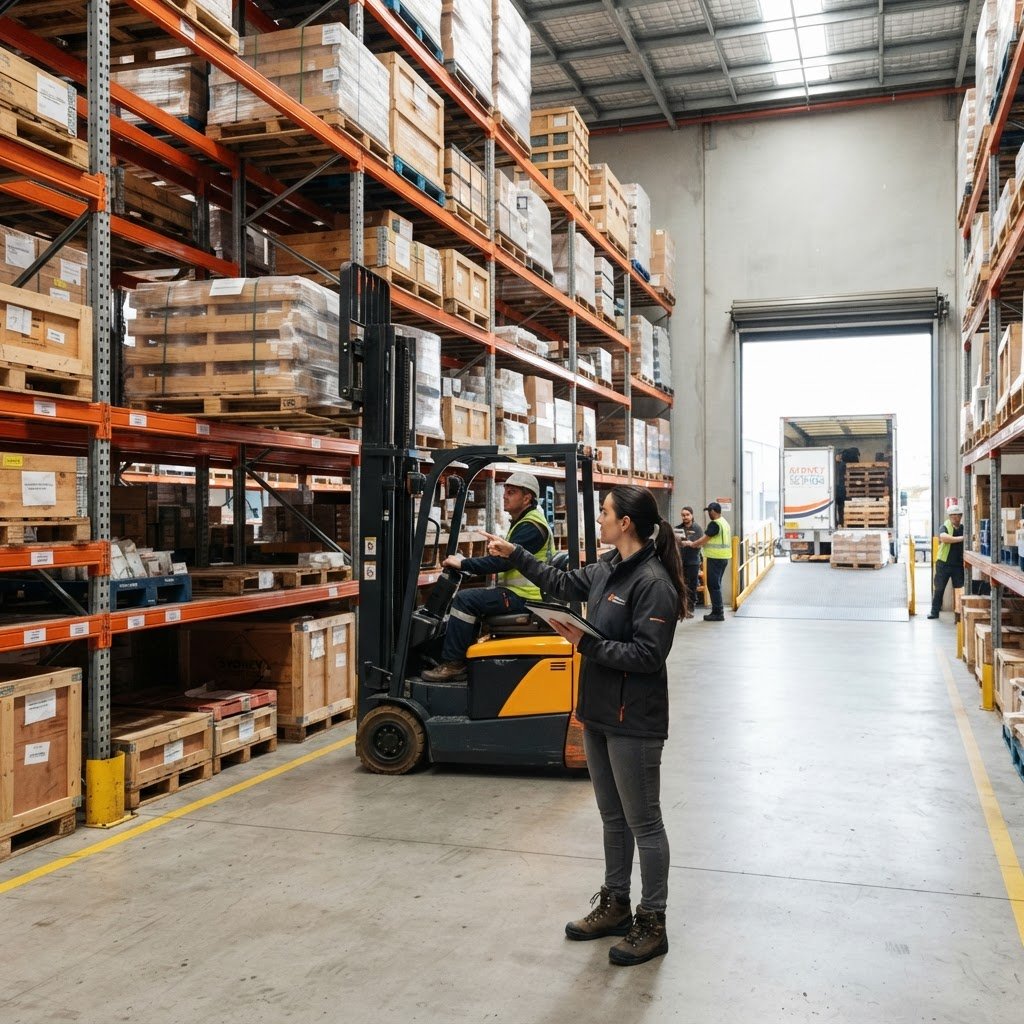
In the high-pressure environment of Sydney’s logistics hubs, time is quite literally money. When your warehouse floor is cluttered and your loading dock is gridlocked, your bottom line suffers. Achieving true operational efficiency isn’t just about how fast your team can move; it’s about the strategic marriage between your warehouse pallet racking and delivery coordination. By aligning how you store goods with how you dispatch them, you can drastically reduce handling times and improve throughput.
The Critical Link Between Storage and Dispatch
Many warehouse managers view storage and transport as two distinct silos. However, the most successful logistics operations in New South Wales treat them as a single, fluid process. If your highest-turnover pallets are stored in the most inaccessible corners of your facility, your forklift operators are wasting fuel and time every single day. By synchronising your rack layout with your delivery schedule, you create a “flow” that turns your warehouse into a high-speed engine.
1. Segment Your Inventory by Velocity
The first step in effective warehouse pallet racking and delivery coordination is to audit your inventory velocity. Not all pallets are created equal. Use the ABC analysis method to rank your stock:
- Category A: Fast-moving goods that should be placed in the easiest-to-access locations near the loading bay.
- Category B: Medium-velocity items stored in secondary zones.
- Category C: Slow-moving or seasonal items kept at the rear or higher levels of the racking.
Optimising warehouse storage in Sydney requires this level of rigour to ensure that your dispatch team isn’t playing a game of Tetris every time a truck pulls up to the dock.
2. Streamlining Your Loading Dock Workflow
Efficient pallet dispatch in Sydney relies on the “staging” process. If you are constantly moving pallets twice, you are losing money. Integrate your scheduling software with your floor layout so that pallets scheduled for morning delivery are pre-staged in a designated staging area the evening before. This prevents the morning rush and keeps the racking aisles clear for replenishment.
| Strategy | Benefit | Best For |
|---|---|---|
| Dynamic Slotting | Reduces travel time by 30% | High-volume distribution |
| Cross-Docking | Eliminates storage time | Perishables or urgent freight |
| Zone Picking | Increases throughput | E-commerce fulfillment |
3. Prioritising Pallet Racking Safety Standards in NSW
Efficiency must never come at the cost of safety. As you adjust your racking layout to accommodate faster delivery schedules, ensure you remain strictly compliant with SafeWork NSW guidelines. Overloading beams to save space or ignoring aisle clearance requirements for forklifts is a recipe for workplace accidents. Always conduct regular rack inspections, especially when reorganising high-traffic areas to improve warehouse logistics flow. Proper signage and clear floor marking are non-negotiable components of a safe and efficient warehouse.
4. Leverage Data for Better Coordination
Manual tracking is no longer sufficient for busy Sydney operations. Use your Warehouse Management System (WMS) to coordinate dispatch times with stock placement. If you see a spike in demand for specific SKUs in your delivery schedule, use that data to trigger an automatic relocation of those goods to “Golden Zone” racking—the areas between waist and shoulder height that require the least travel time and lift height. For businesses struggling with inventory management, learning how to manage pallet inventory effectively can provide the data points needed to make these strategic layout shifts.
Conclusion: Creating a Scalable Future
Mastering the coordination between your storage racks and your delivery schedule is a continuous process of refinement. By moving your fast-movers closer to the dock, maintaining rigorous safety standards, and using data to inform your layout, you can transform your warehouse from a cost centre into a competitive advantage. Remember that logistics is a team sport; ensure your transport partners are in the loop regarding your warehouse capacity to ensure a smooth hand-off every time. Whether you are dealing with local Sydney metro runs or larger NSW distribution, a well-coordinated facility is your best asset.
Frequently asked questions
How often should I review my pallet racking layout?
You should review your layout at least quarterly or whenever there is a significant change in your product mix or delivery volume to ensure your ‘A-grade’ stock remains in the most accessible locations.
What is the ‘Golden Zone’ in warehouse racking?
The Golden Zone refers to the shelving area between waist and shoulder height. Items placed here are the fastest to pick and require the least amount of forklift mast elevation, significantly speeding up dispatch.
Are there specific safety standards for racking in NSW?
Yes, all pallet racking must comply with Australian Standard AS 4084-2012, and businesses must adhere to SafeWork NSW guidelines regarding load limits, signage, and regular professional inspections.
Ready to move your freight?
Fast, reliable pallet transport across Australia — get pricing in minutes.