
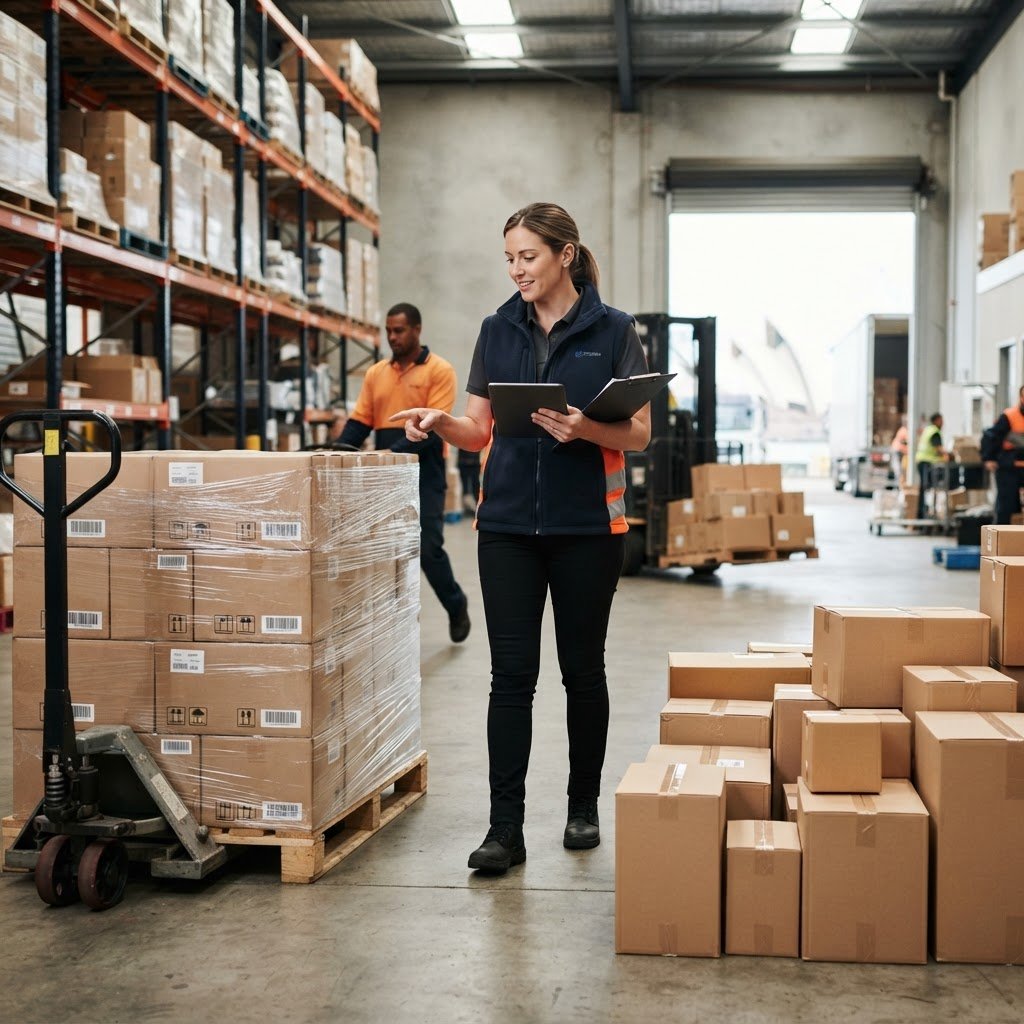
For many businesses operating within the busy Sydney industrial landscape, the decision of how to move goods is often a toss-up between shipping loose bulk cartons or moving to a palletised freight model. Whether you are scaling your e-commerce brand or managing a warehouse distribution network across NSW, choosing the right method is critical to your bottom line. While shipping loose cartons might seem like the cheaper option on the surface, the hidden costs of handling and risk management often tell a different story.
The Core Differences: Bulk Carton vs Pallet Shipping
Understanding the fundamental differences is the first step toward supply chain efficiency. Bulk carton shipping involves moving individual boxes separately. While this offers flexibility for small quantities, it quickly becomes labour-intensive as volume increases. Conversely, palletised freight uses the pallet as the unit of measure, allowing for standardisation in transport and storage. By utilising palletised services, you shift from handling dozens of individual items to managing a single, cohesive unit.
| Feature | Bulk Carton Shipping | Palletised Freight |
|---|---|---|
| Handling Time | High (item by item) | Low (forklift-loaded) |
| Transit Damage Risk | Higher | Lower |
| Storage Efficiency | Low (irregular stacks) | High (racking compatible) |
| Cost per Unit | High at scale | Lower at scale |
Why Pallet Delivery in Sydney Offers Better ROI
When you consider pallet delivery in Sydney, you aren’t just paying for transport; you are paying for speed and safety. Pallets allow for efficient forklift loading, which drastically reduces the time a vehicle spends parked at your loading dock. In a city like Sydney, where traffic congestion and site access can be major bottlenecks, minimising truck turn-around time is essential for cost-effective freight.
The Hidden Costs of Shipping Loose Cartons
Shipping loose cartons creates significant overheads that are often ignored in the initial planning phase. These include:
- Labour costs: More staff hours are required for manual loading and unloading.
- Safety risks: Frequent manual lifting increases the risk of workplace injury under Australian OHS regulations.
- Increased damage rates: Loose boxes are more susceptible to being crushed or misplaced during transit.
Strategies for Efficient Freight Consolidation
If you have outgrown small parcel shipping but aren’t quite ready for full truckloads, freight consolidation in Sydney is your best strategy. By grouping your bulk cartons onto a standard pallet, you benefit from lower freight rates per unit. Consolidation allows you to leverage the existing infrastructure of professional logistics providers, ensuring your goods are stable, secured with shrink wrap, and protected during the journey across the Sydney Metro area.
Selecting the Right Approach for Your Warehouse
Transitioning from loose carton shipping to pallets requires a review of your warehouse distribution protocols. Before making the switch, assess your typical shipment weight and dimensions. If your goods are uniform, stable, and destined for retail or wholesale distribution centres, palletisation is almost always the more professional and cost-effective choice. For businesses dealing with highly irregular shapes or extremely low-frequency shipments, loose cartons may still hold a place, but they should be the exception rather than the rule.
Conclusion: Choosing Sustainability and Scalability
Moving from manual carton handling to a structured palletised system is a hallmark of a business that is ready to scale. By reducing the number of individual touchpoints, you protect your inventory, improve worker safety, and streamline your distribution network. Whether you are servicing the inner west or expanding your reach to the regional NSW borders, the switch to palletised freight provides the predictability that modern Australian businesses need to thrive.
Frequently asked questions
Is pallet shipping always cheaper than shipping bulk cartons?
At lower volumes, shipping loose cartons can seem cheaper, but for higher volumes, pallet shipping offers significant cost savings through reduced labour, faster loading times, and lower damage rates.
What are the benefits of freight consolidation?
Freight consolidation allows you to combine smaller shipments into a single pallet, which lowers your cost per unit and improves the speed and security of your goods during transit within Sydney.
When should my business switch to pallets?
You should consider switching to pallets when your labour costs for manual handling begin to rise, when you experience higher damage rates due to loose shipping, or when you need to improve your warehouse storage efficiency.
Ready to move your freight?
Fast, reliable pallet transport across Australia — get pricing in minutes.