
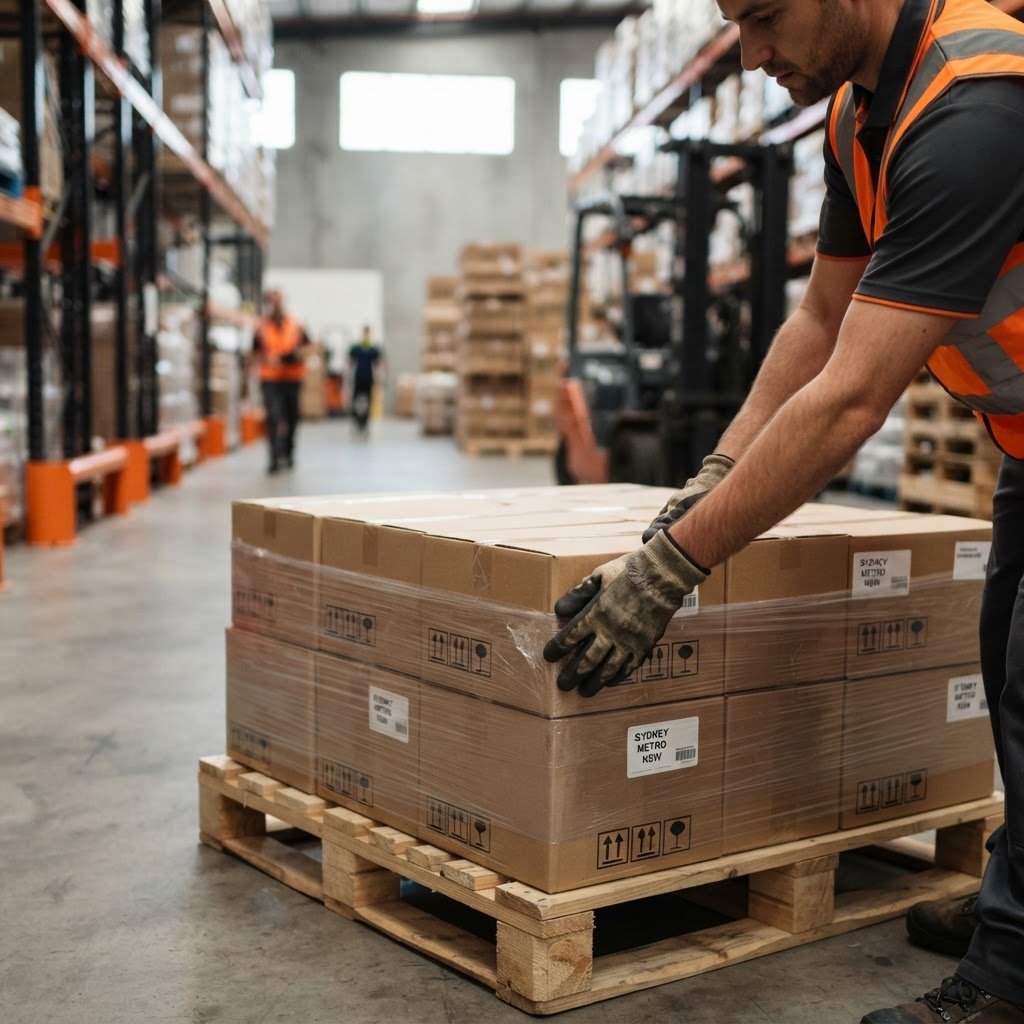
Operating a business in the heart of Sydney comes with a unique set of logistical challenges. From navigating the congestion of the M4 and M5 corridors to meeting the high expectations of B2B clients in North Sydney or the industrial hubs of Western Sydney, your freight needs to arrive in perfect condition. However, pallet shipping mistakes remain one of the most significant hidden costs for NSW enterprises. Whether it is a damaged product, a rejected delivery at a major distribution centre, or a safety incident during transit, the repercussions of poor pallet preparation are far-reaching. By understanding the common pitfalls of pallet delivery in Sydney, businesses can safeguard their bottom line and enhance their operational efficiency.
1. Selecting the Wrong Pallet for the Job
One of the most frequent errors begins before a single box is packed: choosing an inappropriate pallet base. Not all pallets are interchangeable. Using a lightweight export pallet for a heavy industrial load, or attempting to send a standard 1165mm x 1165mm Australian pallet to a recipient who requires Euro-spec dimensions, leads to immediate logistical friction. In Australia, the standard timber pallet is the workhorse of the industry, but businesses often make the mistake of using damaged or ‘one-way’ pallets for heavy, multi-stop deliveries across regional NSW. A pallet with a cracked lead board or a missing block is a structural failure waiting to happen under the stress of heavy braking or sharp turns.
| Pallet Type | Ideal Use Case | Durability Rating | Standard Dimensions |
|---|---|---|---|
| Standard Australian Timber | General domestic NSW logistics | High (Multi-trip) | 1165mm x 1165mm |
| Euro Pallets | International trade / Specific retail | Medium to High | 1200mm x 800mm |
| Plastic Pallets | Hygienic environments (Food/Pharma) | Very High | Varies |
| Export Pallets | One-way international shipping | Low (Lightweight) | 1100mm x 1100mm |
2. The Danger of the ‘Pyramid’ Stack
When stacking goods, many warehouse teams instinctively build a ‘pyramid’ shape, with smaller or lighter items at the top and narrower toward the peak. While this might look stable on a stationary warehouse floor, it is a significant pallet shipping mistake. A pyramid stack lacks the structural integrity provided by a flat top surface and vertically aligned corners. For optimal freight damage prevention, you should aim for a ‘column’ stack where the corners of the boxes are aligned directly on top of each other. This alignment ensures the weight is borne by the strongest part of the packaging—the vertical edges. If you must stack items of different sizes, ensure the top of the pallet remains as flat as possible to allow for potential double-stacking in the truck, provided the goods are robust enough.
3. Overhanging Goods: A Recipe for Disaster
Overhang occurs when the items placed on the pallet extend beyond the edges of the timber base. This is a critical error for Sydney logistics because pallets are often loaded side-by-side in tight configurations. Even a 2cm overhang can lead to significant damage when another pallet is loaded next to it, as the boards of the adjacent pallet can crush or puncture the overhanging goods. Furthermore, overhanging items lose up to 40% of their compression strength because they are not supported by the pallet’s structural perimeter. Always ensure your load is contained within the footprint of the pallet. If your items are oversized, it is essential to source custom-sized pallets, crates, and skids to ensure the entire load is supported.
4. Inadequate Stretch Wrapping Techniques
Stretch wrap is not just there to keep the dust off; it is a structural component of the pallet load. A common mistake is failing to ‘tie’ the load to the pallet. If you only wrap the boxes and do not catch the top few inches of the pallet base, the entire load can slide off the timber during transit—a phenomenon known as ‘shearing’. Another error is insufficient tension. The wrap should be tight enough to pull the boxes together into a single, cohesive unit. Professional pallet packing tips suggest at least three layers of wrap at the base and two at the top, with a 50% overlap as you spiral up the load. For businesses shipping through the National Heavy Vehicle Regulator (NHVR) governed routes, ensuring load stability is not just a best practice; it is a legal requirement under the Chain of Responsibility (CoR).
5. Ignoring the Centre of Gravity
Top-heavy pallets are a major safety risk, especially when navigating the roundabouts and steep inclines common in suburbs like Hornsby or the Northern Beaches. A common mistake is placing heavy items toward the top of the stack, raising the centre of gravity and making the pallet prone to tipping during forklift manoeuvres or transit. Always place the heaviest items at the bottom and as close to the centre of the pallet as possible. This lowers the centre of gravity and increases the overall stability of the load. If a load is inherently unbalanced, it must be clearly marked with ‘Top Heavy’ or ‘Centre of Gravity’ stickers to alert the driver and forklift operators.
6. Vague Labelling and Documentation
Even the most perfectly packed pallet can become a logistical nightmare if the documentation is flawed. In the fast-paced world of shipping logistics in Sydney, drivers and warehouse staff rely on clear, legible labelling. Common mistakes include placing labels on the stretch wrap (which can be torn off), using non-waterproof ink that runs in the rain, or failing to include a complete delivery address and contact name. Every pallet should have at least two labels on adjacent sides. Documentation should also clearly state the total weight and whether the pallet is ‘stackable’ or ‘non-stackable’. Misrepresenting weight is a serious offence that can lead to vehicle overloading and significant fines for both the carrier and the sender.
7. Neglecting the ‘Last Mile’ Reality
Finally, many businesses fail to consider the destination’s limitations. Shipping a standard pallet to a location that only has a small van access or no forklift is a recipe for a failed delivery and additional ‘re-delivery’ fees. Before booking your pallet delivery in Sydney, confirm whether the recipient requires a tailgate truck or if there are specific height restrictions at their loading dock. Planning for these ‘last mile’ variables ensures that your carefully prepared pallet actually makes it into the customer’s hands without delay.
Protecting Your NSW Supply Chain
Avoiding these common pallet shipping mistakes is about more than just reducing damage; it is about building a reputation for reliability. When a Sydney business invests the time into proper palletisation, they reduce the risk of insurance claims, lower their total shipping costs, and ensure a safer working environment for everyone involved in the transport chain. By focusing on the fundamentals—the right pallet, the right stack, and the right wrap—you can navigate the complexities of NSW logistics with confidence.
Frequently asked questions
What is the most common cause of pallet damage during transit in Sydney?
The most common cause is poor weight distribution and overhang. When goods extend beyond the pallet edge or have a high centre of gravity, they are far more susceptible to crushing and tipping during the frequent stops and turns of Sydney metro transport.
How many layers of stretch wrap should I use for a standard pallet?
As a general rule for professional freight, you should apply at least three layers of wrap to the base (including the pallet itself) and at least two layers around the rest of the load with a 50% overlap. High-weight or unstable loads may require more.
Is it legal to ship an overhanging pallet in NSW?
While not strictly illegal in all cases, overhang is highly discouraged by the National Heavy Vehicle Regulator (NHVR) because it compromises load stability and increases the risk of the load shifting, which can lead to fines under Chain of Responsibility laws.
Can I use a damaged pallet if the load is light?
No. Even for light loads, a damaged pallet can fail during forklift lifting or if another pallet is stacked on top of it. Always inspect pallets for cracked boards or loose nails before use to ensure safety and prevent freight rejection.
Ready to move your freight?
Fast, reliable pallet transport across Australia — get pricing in minutes.