
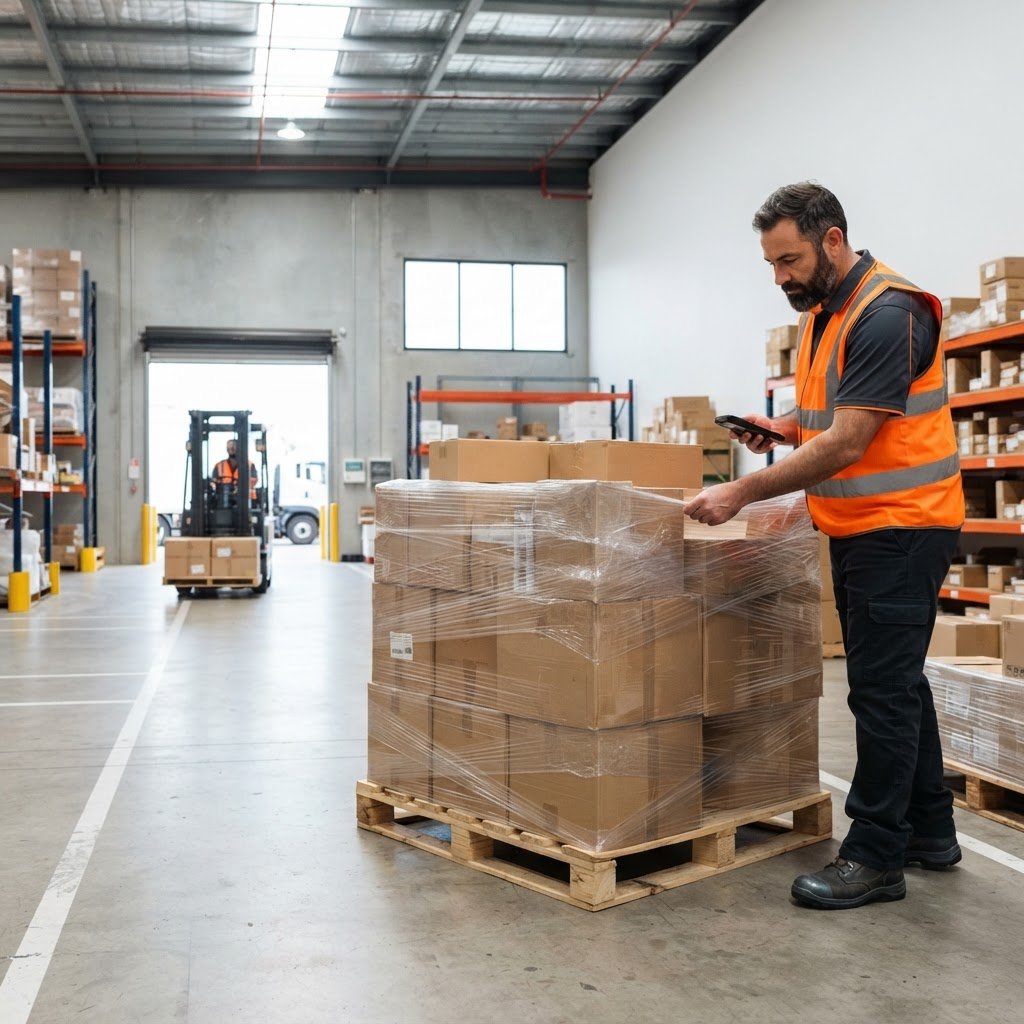
When you are sending goods across Sydney or regional NSW, the difference between a successful delivery and a logistical nightmare often comes down to the first ten minutes of preparation. For many businesses, palletising is an afterthought—a task delegated to the warehouse floor without much scrutiny. However, if you have ever dealt with the fallout of a rejected consignment or a damaged shipment, you know that understanding how to pack a pallet for shipping is a critical business skill that directly impacts your bottom line.
Poorly packed pallets lead to more than just broken products. In the competitive world of Sydney logistics, they result in pallet rejection fees, re-stacking charges at the depot, and increased insurance premiums. By mastering the fundamentals of safe pallet loading and pallet wrapping tips, you can ensure your freight moves through the supply chain efficiently and affordably.
The Real Cost of Poor Pallet Preparation
In the transport industry, space and safety are the two most valuable commodities. When a pallet is packed incorrectly, it takes up more space than it should or, worse, becomes a safety hazard for the driver and the public. In New South Wales, the National Heavy Vehicle Regulator (NHVR) sets strict standards for load restraint, and freight carriers will not hesitate to reject a load that looks unstable.
From a pricing perspective, carriers generally price based on a standard footprint (1165mm x 1165mm). If your goods overhang the edges, you might be charged for two pallet spaces instead of one. Furthermore, if a pallet collapses during transit due to poor wrapping, the cost of clean-up and redelivery often exceeds the original value of the freight. Investing in high-quality pallets and equipment at the start is always cheaper than paying for a recovery service halfway to Newcastle.
Skid vs Pallet Shipping: Which One Should You Choose?
One of the first decisions you need to make involves the base of your shipment. While many people use the terms interchangeably, there is a distinct difference between a skid and a pallet, especially regarding cost and stability.
| Feature | Standard Australian Pallet | Skid (Single Deck) |
|---|---|---|
| Construction | Top and bottom deck boards with stringers | Top deck only, no bottom boards |
| Stability | High – designed for racking and heavy loads | Medium – easier to move with hand jacks |
| Cost | Slightly higher due to materials | Lower – uses less timber |
| Best For | Heavy manufacturing, long-haul NSW freight | Light loads, internal warehouse movement |
| Stackability | Excellent and safe | Poor – can damage goods underneath |
For most pallet delivery Sydney requirements, the standard 1165mm timber pallet is the gold standard. It provides a stable base that can be safely loaded onto trucks and into warehouse racking without the risk of the bottom layer crushing under pressure.
Step-by-Step: How to Pack a Pallet for Shipping
Properly loading a pallet is a bit like a game of Tetris, but with much higher stakes. Follow these steps to ensure your load remains upright and intact from Sydney Metro to the furthest reaches of NSW.
1. Weight Distribution and Foundation
Always place the heaviest items at the bottom. This lowers the centre of gravity and prevents the pallet from becoming top-heavy. Ensure the weight is evenly distributed across the surface of the pallet rather than concentrated in one corner. If you are shipping liquids or dense machinery, this step is non-negotiable for safe pallet loading.
2. The ‘No Overhang’ Rule
Your goods should never extend beyond the edges of the pallet. Overhanging boxes are prone to being crushed by other pallets during transit and are significantly more likely to be punctured by a forklift. Keeping everything within the 1165mm boundary is essential for meeting freight packing requirements in NSW.
3. Column vs. Interlocking Patterns
While interlocking (like bricks in a wall) might seem more stable, for palletised cardboard boxes, column stacking is often preferred. This ensures the corners of the boxes—the strongest part—are aligned, providing maximum vertical strength. However, if your load is irregularly shaped, interlocking may be necessary to prevent shifting.
4. Create a Flat Top
Carriers love stackable pallets. If your pallet has a flat top, the driver can potentially stack another light pallet on top, which helps keep shipping costs down across the industry. Avoid ‘pyramid’ stacking, which makes the pallet unstackable and increases the risk of the top items falling off.
Professional Pallet Wrapping Tips
Shrink wrap is the glue that holds your hard work together. Without it, even the most perfectly stacked pallet will fall apart under the vibrations of a truck on the M4. Here is how the pros do it:
- Start at the Base: Tie the wrap to a corner of the pallet base. You must secure the load to the pallet itself, not just the goods to each other.
- The Three-Layer Rule: Wrap around the base at least three times to create a strong anchor.
- Spiral Upwards: Work your way up the pallet, overlapping each layer by 50%.
- Top and Bottom Tension: Pull the wrap tight as you go. It should feel firm to the touch, not loose or saggy.
- Finish at the Top: Once you reach the top, wrap it twice and then spiral back down to the middle for extra reinforcement.
Sydney Freight Requirements & Safety Standards
Operating within the NSW transport network requires compliance with the Load Restraint Guide. Sydney’s urban traffic involves frequent stops and starts, which puts unique lateral pressure on freight. If you are shipping via a third-party carrier, they will expect your pallet to be ‘load-ready.’
This means your pallet should be clean (no protruding nails or broken boards), the wrap should be clear of any loose ends that could get caught in machinery, and the labelling should be visible. Using a logistics partner that understands these local nuances can save you hours of administrative headaches. For businesses looking to streamline their digital logistics workflow, platforms like Base44 offer tools to manage these processes more effectively.
Labelling and Final Inspection
Before the truck arrives for your pallet delivery in Sydney, perform a final ‘shake test.’ If you gently shake the top layer and the whole pallet moves as one unit, you have done a good job. If the top layer wobbles independently, you need more wrap.
Finally, ensure your shipping labels are applied to the side of the pallet, not the top. Use at least two labels on opposite sides so that a forklift driver can see the destination regardless of how the pallet is oriented. If the goods are fragile or top-heavy, use high-visibility stickers to alert handlers. Clear communication through labelling is the final step in ensuring your goods arrive exactly as they left your warehouse.
By following these guidelines, you aren’t just packing a pallet; you are protecting your revenue, your reputation, and the safety of everyone on the road. Whether you are shipping a single skid or a full semi-trailer load, quality preparation is the cheapest insurance policy you can buy.
Frequently asked questions
What is the standard pallet size for shipping in Australia?
The standard Australian pallet size is 1165mm x 1165mm. This size is specifically designed to fit perfectly in Australian railway wagons and is the standard for most NSW freight carriers.
How many layers of shrink wrap should I use?
You should use at least three layers at the base to anchor the load to the pallet, and overlap each layer by 50% as you work your way up. For heavy or unstable loads, a double wrap (up and back down) is recommended.
Can my goods hang over the edge of the pallet?
No. Overhang significantly increases the risk of damage and often leads to additional ‘oversize’ charges from Sydney transport companies. Always ensure your goods sit within the 1165mm footprint.
Why is column stacking better than interlocking for boxes?
Column stacking aligns the corners of cardboard boxes, which are their strongest points. This provides better vertical compression strength, making the pallet safer to stack and less likely to collapse.
What is the main difference between a skid and a pallet?
A pallet has a bottom deck which provides more stability and makes it suitable for racking. A skid has no bottom deck, making it cheaper and easier to move with a pallet jack, but less stable for heavy transport.
Ready to move your freight?
Fast, reliable pallet transport across Australia — get pricing in minutes.