
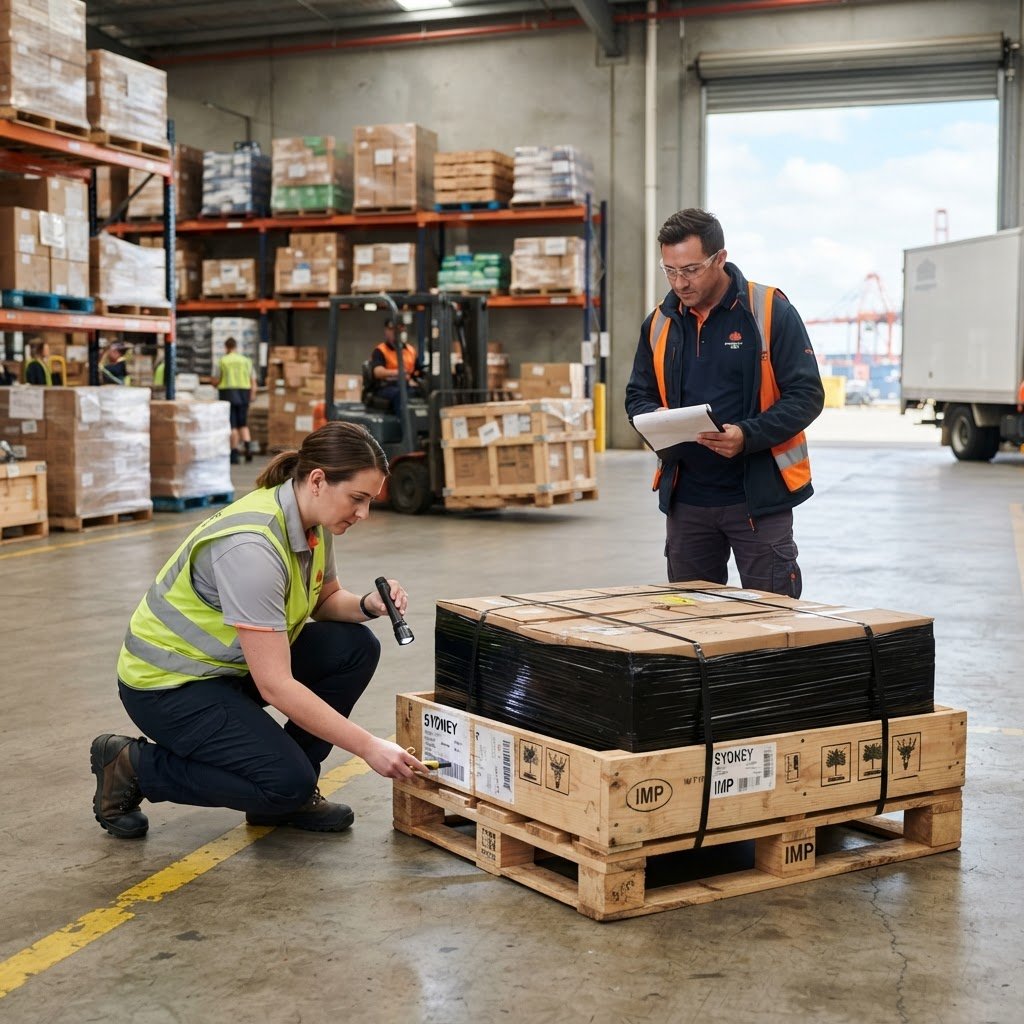
For Sydney businesses importing goods, the journey from overseas supplier to your warehouse floor involves more than just transit times and shipping costs. One of the most critical, yet often overlooked, hurdles is Australia’s stringent biosecurity landscape. Importing goods on pallets into NSW means adhering to strict regulations set by the Department of Agriculture, Fisheries and Forestry (DAFF) to ensure that hitchhiker pests and pathogens don’t enter our ecosystem.
If you are new to the world of global logistics, the regulatory maze can feel overwhelming. This guide breaks down the essential biosecurity requirements for palletised imports in Sydney, helping you avoid costly quarantine delays and storage fees at the wharf.
The Critical Role of ISPM 15 Compliance
The primary concern for border authorities regarding timber packaging is the risk of pests hiding within wood. ISPM 15 (International Standards for Phytosanitary Measures No. 15) is the global benchmark for wood packaging material. Any timber pallet arriving in Sydney must be compliant, which generally means it has been heat-treated or fumigated and marked with the internationally recognised IPPC stamp.
- Heat Treatment (HT): Wood is heated to a minimum core temperature of 56°C for at least 30 minutes.
- Fumigation (MB): Specifically methyl bromide, though use is increasingly restricted due to environmental impacts.
- The Stamp: Always check for the wheat-sheaf logo, the country code, the producer code, and the treatment method.
Missing or illegible stamps are a common cause for inspection, which can lead to expensive quarantine pallet inspection in Sydney depots.
Understanding DAFF Pallet Compliance in Sydney
When your goods arrive at a facility like Port Botany, they are subject to risk assessment. DAFF officials are looking for more than just a stamp; they are checking for cleanliness and physical integrity. If your pallet arrives covered in soil, debris, or shows signs of insect infestation, it will likely be flagged for intervention.
To keep your logistics for imported palletised freight running smoothly, ensure your overseas suppliers are aware of Australian standards before the goods are even loaded. If a pallet is deemed non-compliant, you will face two primary options: exportation (sending the pallet back) or destruction/treatment at your expense.
| Risk Factor | Potential Impact | Mitigation Strategy |
|---|---|---|
| Bark/Fungi | Mandatory Treatment | Request clean, debarked timber |
| Missing IPPC Stamp | Export or Destruction | Audit supplier packing procedures |
| Soil/Debris | Quarantine Inspection | Ensure pallet cleanliness |
| Damaged Timber | High Risk Rating | Use high-quality new pallets |
Reducing Risks During Transit and Handling
Beyond the wooden pallet itself, the way your cargo is secured matters. Using non-timber alternatives can sometimes eliminate the need for complex biosecurity clearances. If you must use timber, consider opting for high-quality, new pallets rather than recycled ones, as the latter have a higher risk of carrying contamination or having illegible stamps.
For businesses looking to streamline their operations, managing your pallet inventory effectively can prevent these issues from compounding. It is often wise to work with a provider who understands how to optimise your warehouse layout for faster dispatch, especially when dealing with time-sensitive quarantine clearances.
Best Practices for Importers
Navigating these regulations is a proactive process. Here are three steps to ensure your supply chain remains uninterrupted:
- Supplier Education: Provide your international partners with a clear document outlining Australia’s import requirements.
- Documentation Accuracy: Ensure your packing declaration clearly states the type of packaging material used.
- Partner with Professionals: Use a customs broker and a logistics provider familiar with the specific quarantine protocols in NSW.
If you find that your incoming shipments are creating bottlenecks, it may be time to reassess your pallet logistics strategy. Proper preparation at the point of origin is the most effective way to ensure your freight clears Sydney customs without being held up by biosecurity concerns.
Frequently asked questions
What is the most important requirement for timber pallets entering Australia?
All timber packaging, including pallets, must be ISPM 15 compliant. This means the wood must be heat-treated or fumigated and marked with the official IPPC stamp showing the treatment method and producer code.
What happens if my pallets are found to be non-compliant at the Sydney wharf?
If pallets are non-compliant, they may be subject to a quarantine pallet inspection. You will typically be required to pay for the cargo to be treated, destroyed, or exported back to the country of origin.
Can I use plastic pallets to avoid biosecurity issues?
Yes, plastic pallets generally do not require the same biosecurity treatments as timber, as they are not susceptible to wood-boring insects. This can simplify the customs clearance process significantly.
Ready to move your freight?
Fast, reliable pallet transport across Australia — get pricing in minutes.