
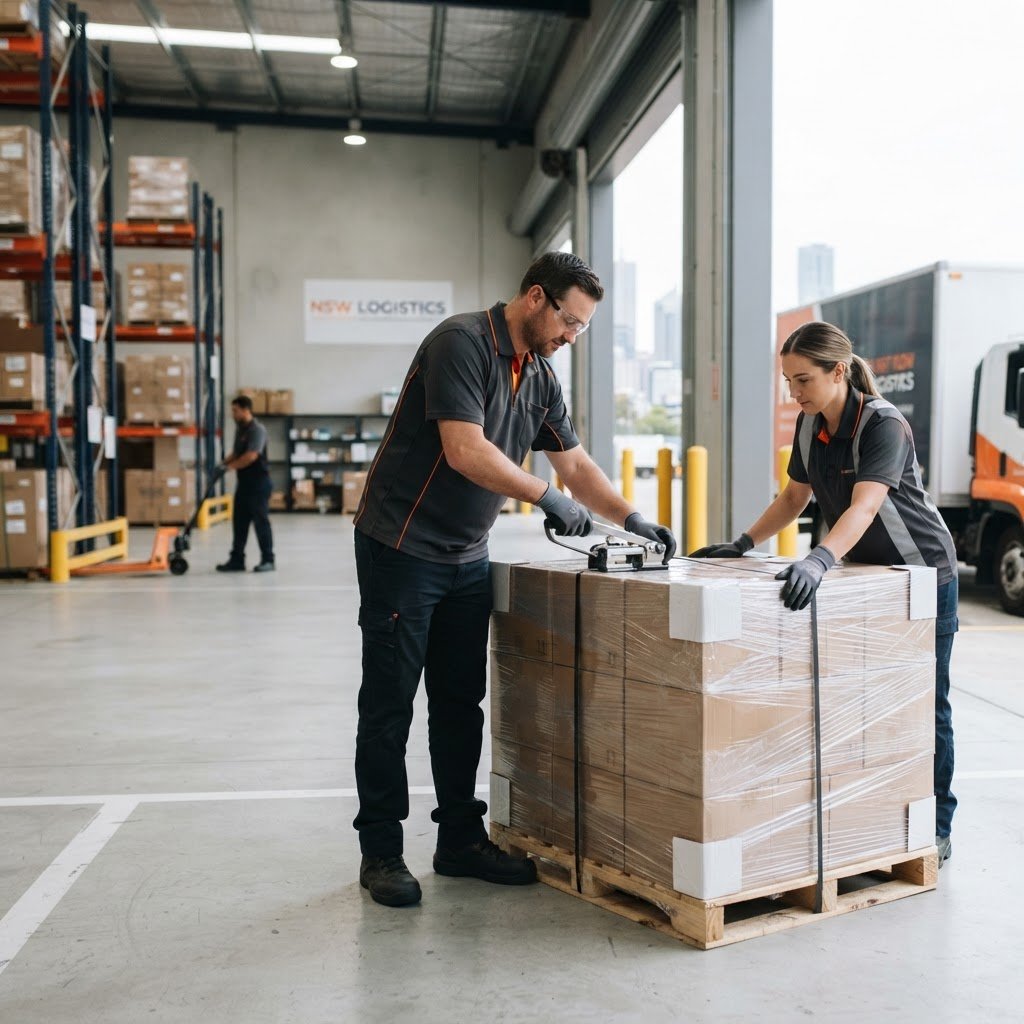
When it comes to the logistics of getting goods from your warehouse to a customer, many businesses believe that simply piling items onto a timber base and wrapping them in plastic is enough. Unfortunately, this is a dangerous misconception that frequently leads to damaged inventory, rejected loads, and significant financial loss. Learning how to prepare goods for palletised freight is not just about ticking a box; it is the most critical step in ensuring your products arrive in pristine condition across Sydney and regional New South Wales.
Myth #1: The More Plastic, The Better
A common mistake in pallet wrapping best practices is assuming that endless layers of shrink wrap can compensate for poor stacking. While tension is necessary, using plastic to hold an unstable load together is a recipe for disaster. If your goods are shifting on the pallet, no amount of film will prevent them from leaning or toppling during the vibrations of road transport.
Instead, focus on the foundation. Ensure your heaviest items are at the bottom and your goods are perfectly centred to prevent the pallet from becoming top-heavy or lopsided. For professional-grade results, always use high-quality, pre-stretched film, applying it with a consistent overlap to create a unified ‘block’ of cargo that moves as one solid unit with the pallet itself.
Myth #2: Any Pallet Will Do
Not all timber bases are created equal. Many businesses try to cut costs by using damaged or flimsy pallets for heavy freight. Using a structurally compromised pallet is the quickest way to guarantee damage. Whether you are shipping to Newcastle or across the Sydney Metro area, choosing the right equipment is essential. For more detailed guidance on selecting your gear, you can review our guide on how to choose the right pallet supplier in Sydney.
| Pallet Condition | Risk Level | Recommendation |
|---|---|---|
| Loose/Split Boards | High | Discard immediately |
| Protruding Nails | Medium | Hammer down or replace |
| Fungal Staining | Moderate | Check for ISPM 15 compliance |
| Structurally Sound | Low | Safe for general freight |
The Art of Securing Pallets for Transport
Simply ‘stacking’ is not ‘securing.’ If your goods are irregular in shape or prone to movement, you must incorporate edge protectors and strapping. Cardboard edge protectors are inexpensive but highly effective at preventing the plastic wrap from cutting into your boxes and providing vertical stability. Furthermore, when securing pallets for transport, ensure your strapping is tensioned correctly—if it is too loose, it offers no protection; if it is too tight, it may crush your packaging.
Preventing Pallet Freight Damage: A Strategic Approach
When it comes to preventing pallet freight damage, the biggest enemy is internal movement. If an item moves inside its own box, or a box moves on the pallet, the friction and impacts will eventually breach your packaging. Here is a quick checklist for your dispatch team:
- Use non-slip sheets between layers of boxes.
- Ensure there is no ‘overhang’ where goods extend beyond the pallet edge.
- Avoid ‘pyramid’ stacking; keep the load height square.
- Label every side of the pallet, not just the top.
By following these pallet shipping tips Sydney businesses rely on, you effectively mitigate the common risks associated with transit on NSW roads. Remember, modern freight is often handled by automated systems at depots; if your pallet is not uniform or square, it may be rejected by scanning equipment.
Why Freight Preparation is the Real Efficiency Driver
Many dispatch managers in NSW believe that rushing the packing process saves time. In reality, poor preparation creates a domino effect. If a pallet fails, the delivery driver must stop, the depot must re-wrap the goods, and your customer receives a damaged shipment. It is far more efficient to spend five extra minutes per pallet during the initial loading phase. For those looking to streamline their operations, understanding the workflow is key; see our insights on how to prepare your warehouse for efficient pallet loading and dispatch.
Proper preparation is the cornerstone of a successful logistics chain. By debunking the myths surrounding palletisation and focusing on structural integrity, you can ensure that your goods represent your brand professionally, from your warehouse floor all the way to your customer’s door.
Frequently asked questions
Does more shrink wrap always mean a safer pallet?
No. Excessive wrapping is often used to mask an unstable load. A pallet should be stable through its structural stacking (heavy items on bottom, centered) before it is wrapped. Excessive plastic can also trap moisture and hide movement.
What is the best way to prevent goods from shifting on a pallet?
Use non-slip sheets between layers of boxes, ensure your load is square with no overhang, and use corner boards with steel or plastic strapping to tie the load securely to the base.
Can I reuse any wooden pallet for my goods?
Not if it is damaged. Always inspect for split boards, missing nails, or rot. Using a compromised pallet increases the risk of the base collapsing during forklift handling.
Ready to move your freight?
Fast, reliable pallet transport across Australia — get pricing in minutes.